 Tronscanner
Your AI Agent Can Use Crypto. How Do You Make Sure It Can’t Do More Than You Allow?
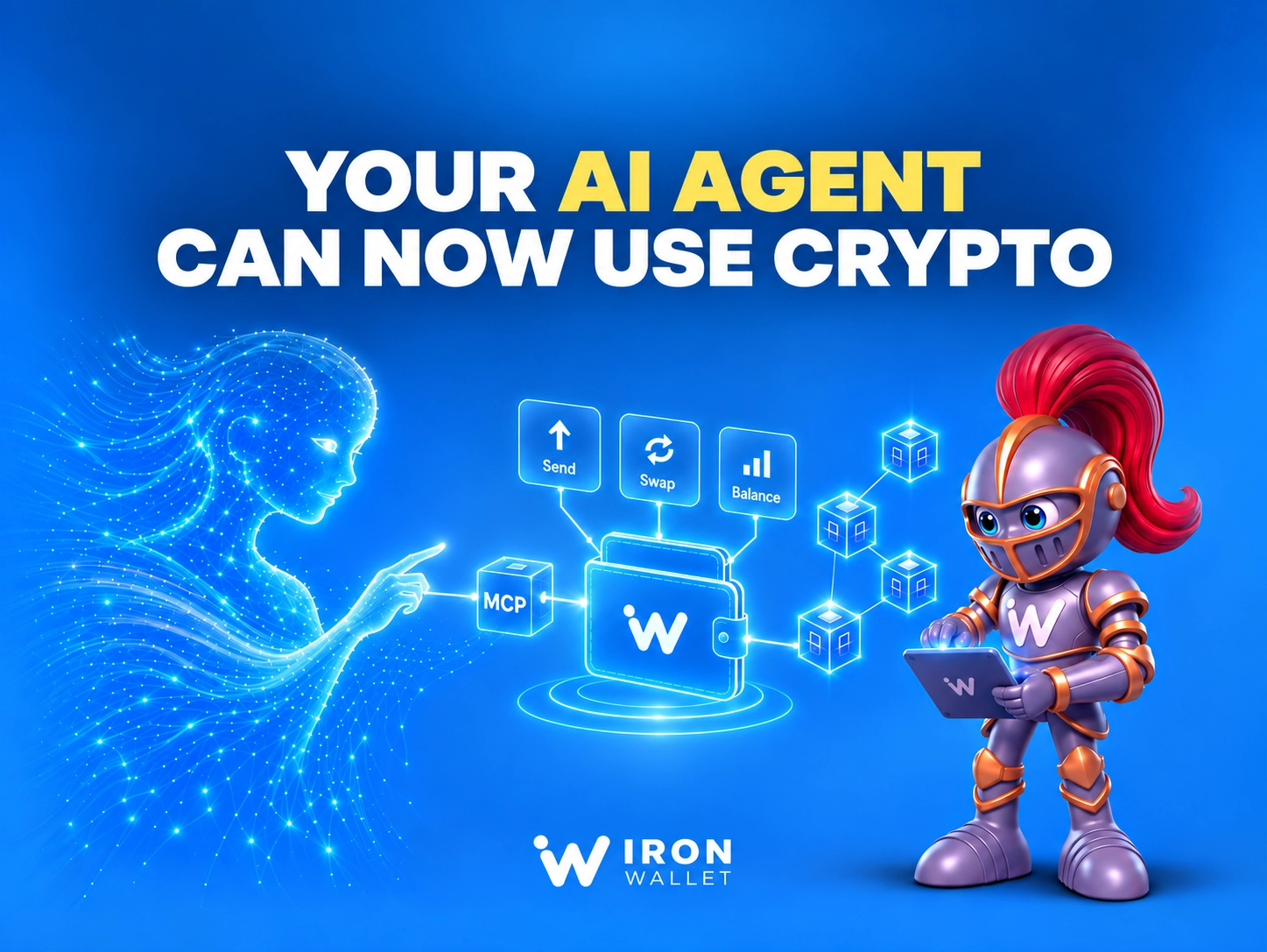
Your AI Agent Can Use Crypto. How Do You Make Sure It Can’t Do More Than You Allow?
AI agents are quickly becoming capable of doing more than answering questions. They can check balances, prepare transactions, interact with apps, find swap routes, and perform actions on a user’s behalf.
In crypto, that opens up an obvious possibility: instead of manually going through every step, you could simply tell an AI agent what you want to do.
But it also creates a much more important question.
If an AI agent can interact with my crypto wallet, how do I know it will only do what I allow?
That concern is becoming increasingly relevant as AI moves from providing information to taking actions.
The broader payments industry is already exploring the same issue. Companies such as Visa and Mastercard have been discussing authorization, transparency, trust, and safeguards as essential parts of agent-based payments.
Crypto adds another layer: blockchain transactions can be irreversible.
That means the important question is not simply whether an AI agent can use crypto.
It is how much control the agent actually has.
Can an AI agent just access your wallet and move funds?
Not by itself.
An AI model does not automatically gain access to your private keys, recovery phrase, or crypto.
It needs a technical connection to a wallet and access to specific tools that allow it to perform certain actions.
This is where the architecture matters.
A properly designed system separates the AI agent from the sensitive wallet layer. The agent can request an action, but the wallet remains responsible for key storage, transaction creation, policy checks, signing, and broadcasting.
The difference is important.
Giving an AI access to a wallet does not have to mean giving the AI unrestricted control over that wallet.
What does the AI agent actually see?
That depends on what the wallet allows it to access.
For example, an agent may be given tools to:
check a wallet balance;
view transaction history;
generate a receiving address;
estimate a network fee;
prepare a transfer;
execute a permitted swap;
send a transaction within predefined rules.
The agent does not need the recovery phrase or private keys to perform these tasks.
It only needs access to the specific wallet functions exposed to it.
Where are the private keys?
With IronWallet MCP, the wallet remains self-custodial.
The recovery phrase and private keys stay local.
Transactions are also signed locally rather than by the AI agent.
This means the agent can interact with the wallet through available tools without receiving the secret information that controls the wallet.
The agent can ask the wallet to perform an operation.
It does not become the wallet.
Can you limit what the AI agent is allowed to do?
Yes.
This is one of the most important parts of giving an AI agent access to crypto.
With IronWallet MCP, permissions can be configured so the agent is not simply given unlimited transaction access.
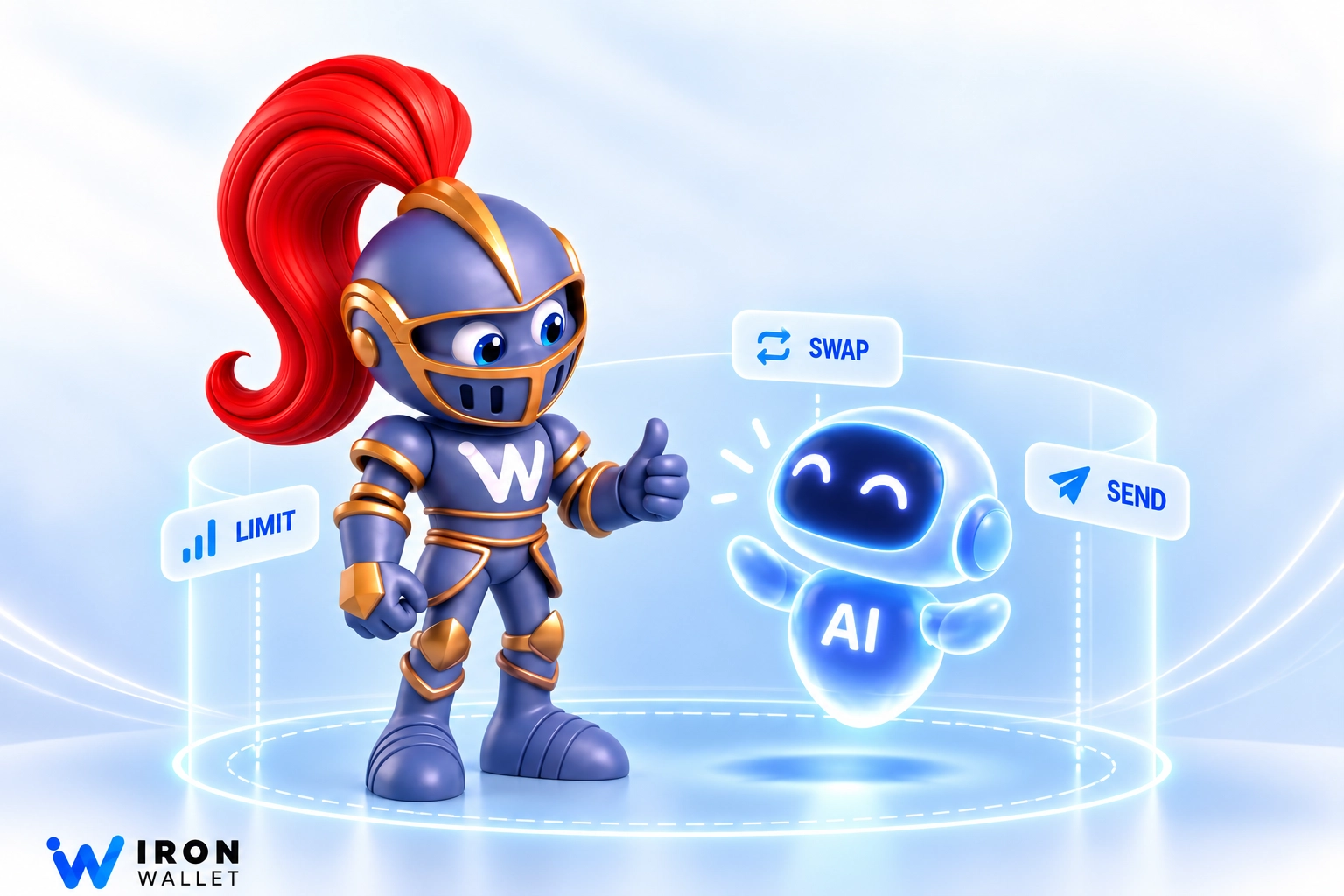
For example, a wallet can be configured as read-only. In that case, the agent can retrieve information but cannot send funds.
A maximum transaction value can also be set using maxPerTxUsd.
You can also restrict transfers to an allow-list of approved recipient addresses.
These policies are optional and are disabled by default, so the user decides which restrictions should apply to a particular wallet.
What happens if the agent tries to do more than it is allowed to do?
The wallet policy becomes the boundary.
If an action violates the configured restrictions, it should not be signed and executed simply because the AI requested it.
For example, if a wallet has a transaction limit, a request above that limit falls outside the permitted policy.
If transfers are restricted to approved recipients, an address outside that allow-list is not permitted.
If the wallet is read-only, sending crypto is outside the agent’s available permissions entirely.
This creates an important separation between what an AI may want to do and what the wallet is actually authorized to do.
Does every transaction require manual confirmation?
Not necessarily.
The purpose of an AI-connected wallet is not to force the user to manually repeat every step the agent is supposed to automate.
Instead, the level of autonomy can depend on how the wallet is configured.
The important part is that the AI operates inside the permissions available to it rather than receiving unrestricted access to the wallet’s keys.
That allows automation without turning control of the wallet over to the AI model itself.
Why use a separate wallet for an AI agent?
Separation reduces unnecessary exposure.
Instead of connecting an agent to a wallet containing everything you own, a dedicated wallet can be funded only with the assets needed for a particular purpose.
That creates another practical boundary.
Even before software-level restrictions such as transaction limits or recipient allow-lists are considered, the agent is working with a wallet whose role and available funds can be intentionally limited.
For automated crypto workflows, that is a much cleaner model than giving broad access to a primary wallet.
How does IronWallet MCP fit into this?
IronWallet MCP connects AI agents with a dedicated self-custody crypto wallet through the Model Context Protocol.
The agent can use supported wallet tools for operations such as checking balances, viewing transactions, receiving crypto, estimating fees, sending assets, and performing supported swaps.
At the same time, the sensitive wallet layer remains local.
The AI does not need your recovery phrase.
It does not need your private keys.
And it does not sign transactions itself.
The result is a structure where an AI agent can help use crypto while the wallet remains the layer that controls access, policies, and signing.
So who is actually in control?
The goal of agentic crypto should not be to give an AI unlimited authority over your funds.
It should be to give the agent exactly the capabilities it needs — and no more.
That means separating the AI from private keys, signing transactions locally, using dedicated wallets where appropriate, and defining clear permissions for what the agent can and cannot do.
AI agents can make crypto interactions significantly more convenient.
But convenience should not require giving up self-custody.
With IronWallet MCP, the agent gets tools.
You keep the keys. Your keys. Your crypto.