




Italy launches deep review into crypto risks as market influence grows
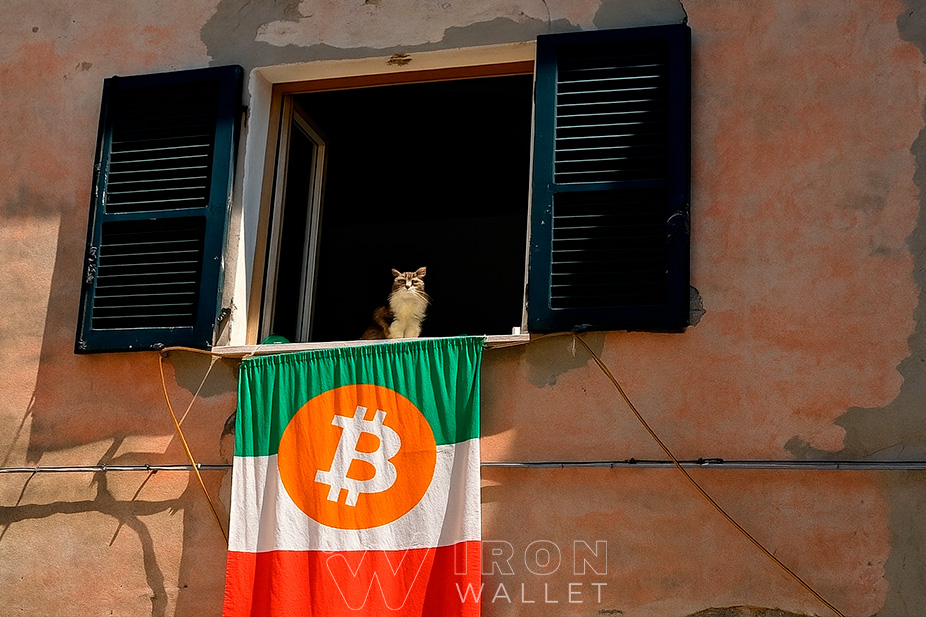
Italy has begun a comprehensive review of the risks posed by retail investors’ growing exposure to cryptocurrencies, reflecting mounting concern among regulators as digital assets become more entrenched in mainstream finance.
The initiative, announced Thursday, comes from the country’s Macroprudential Policy Committee—a group that includes the Bank of Italy’s governor as well as top insurance, pension, and treasury officials. The committee warned that crypto-related risks may intensify due to the “increasing interconnections” between digital assets and the traditional financial system, combined with uneven regulation across international markets.
According to Italy’s Ministry of Economy and Finance, the review aims to assess protections for retail investors holding crypto directly or indirectly. The move underscores a broader fear across Europe that inconsistent global rules may be creating regulatory blind spots, especially as the U.S. shifts toward more crypto-friendly policies and digital asset markets again break above $3 trillion, per CoinGecko.
“Regulatory divergence absolutely creates real risks,” said Ruchir Gupta, co-founder of Gyld Finance, in comments to Decrypt. “It pushes riskier behavior into lightly supervised jurisdictions and makes it harder to pinpoint where major financial exposures really sit.”
Gupta believes a “meaningful convergence” in global regulation could emerge by 2026 as the U.S. finalizes its own rulebook, pressuring other jurisdictions to follow suit. Italy’s review, he added, shows that regulators now view crypto not as a niche curiosity, but as a factor in broader financial stability.
Italy’s Central Bank repeats systemic risk concerns
The Bank of Italy—Banca d’Italia—has long warned about crypto’s potential to destabilize traditional markets, and its latest Financial Stability Report reinforces that stance.
The central bank pointed to the sharp price movements that followed Donald Trump’s election win and the pro-crypto posture of his administration. It cautioned that if digital assets become more intertwined with traditional markets, vulnerabilities could spread more easily across financial institutions.
The bank also highlighted governance issues within the crypto sector, noting that roughly 75% of entities holding significant Bitcoin positions are based in the United States, while representation in the eurozone remains minimal. This imbalance, it warned, could magnify conflicts of interest and expose Europe to external shocks.
Europe moves toward tougher crypto oversight
Italy’s deep-dive review is unfolding just as Europe embraces a more assertive regulatory stance toward fintech and digital assets. According to Nitesh Mishra, CTO and co-founder of ChaiDEX, the region is clearly entering “a phase of more aggressive supervision,” with Italy’s move marking a notable escalation.
Mishra said the EU’s tightening includes stricter licensing requirements, higher capital standards, and stronger anti–money laundering rules under the Markets in Crypto-Assets (MiCA) framework. While compliance costs for crypto companies will rise, he argued that platforms operating within the EU will benefit from regulatory clarity, easier passporting across member states, and a reputation advantage over firms operating in lightly regulated jurisdictions.
“Serious players are likely to treat Europe as the gold standard,” Mishra said, predicting that the industry will move away from riskier offshore hubs in favor of safer, more structured environments for retail users.
Disclaimer
This rewritten article is based on an original report published by Decrypt. You can read the original at: https://decrypt.co/.