 Tronscanner
Cold storage vs hot wallet: which one do you actually need?

"Use a hot wallet for spending, cold storage for saving" is the advice you'll hear everywhere, and it's not wrong. But it's also not specific enough to actually help you decide what to do with your own funds. The real answer depends on how much you hold, how frequently you interact with it, and what you're using it for. Here's a deeper look at both options and the exact scenarios where each one makes sense.
What's the actual difference?
Hot wallets are connected to the internet. That includes mobile apps, browser extensions, and any wallet you can open and sign a transaction from in seconds. Convenience is the whole point: your funds are one tap away.
Cold storage means your private keys are generated and stored completely offline. That includes hardware wallets, air-gapped devices, and even a seed phrase written on paper or engraved on metal and locked away. Nothing about a cold wallet touches the internet during key generation or storage, which is exactly what makes it harder to compromise remotely.
The trade-off is simple: hot wallets are designed for easy access, while cold storage focuses on security. Neither option is superior; they serve different purposes.
Scenario 1: You're actively trading or using DeFi
If you're swapping tokens, connecting to dApps, or moving funds multiple times a week, hot wallet is the only realistic option. Cold storage requires a physical device or manual process every time you sign a transaction, which works well for a monthly transfer but can be challenging for daily use.
What to do: keep only the funds you actively need for trading in your hot wallet. Treat it like a checking account, not a savings account. If a balance grows well beyond what you're actively using, move the excess to cold storage.
Scenario 2: You're holding for the long term
If you bought Bitcoin or Ethereum with a long-term perspective and have no plans to touch it soon, there's no reason for those funds to sit anywhere near an internet connection. This is the textbook case for cold storage: a hardware wallet or an offline backup that only comes out when you actually need to move funds.
What to do: set up cold storage once, verify your backup works before you rely on it, and then leave it alone. The whole point is that you're not interacting with it often, so the setup should be done carefully the first time.
Scenario 3: You hold a mix of small, everyday amounts and larger savings
Most people aren't just traders or just long-term holders; they engage in both activities, balancing them in various ways. In that case, the answer isn't "pick one," it's "split your funds by purpose."
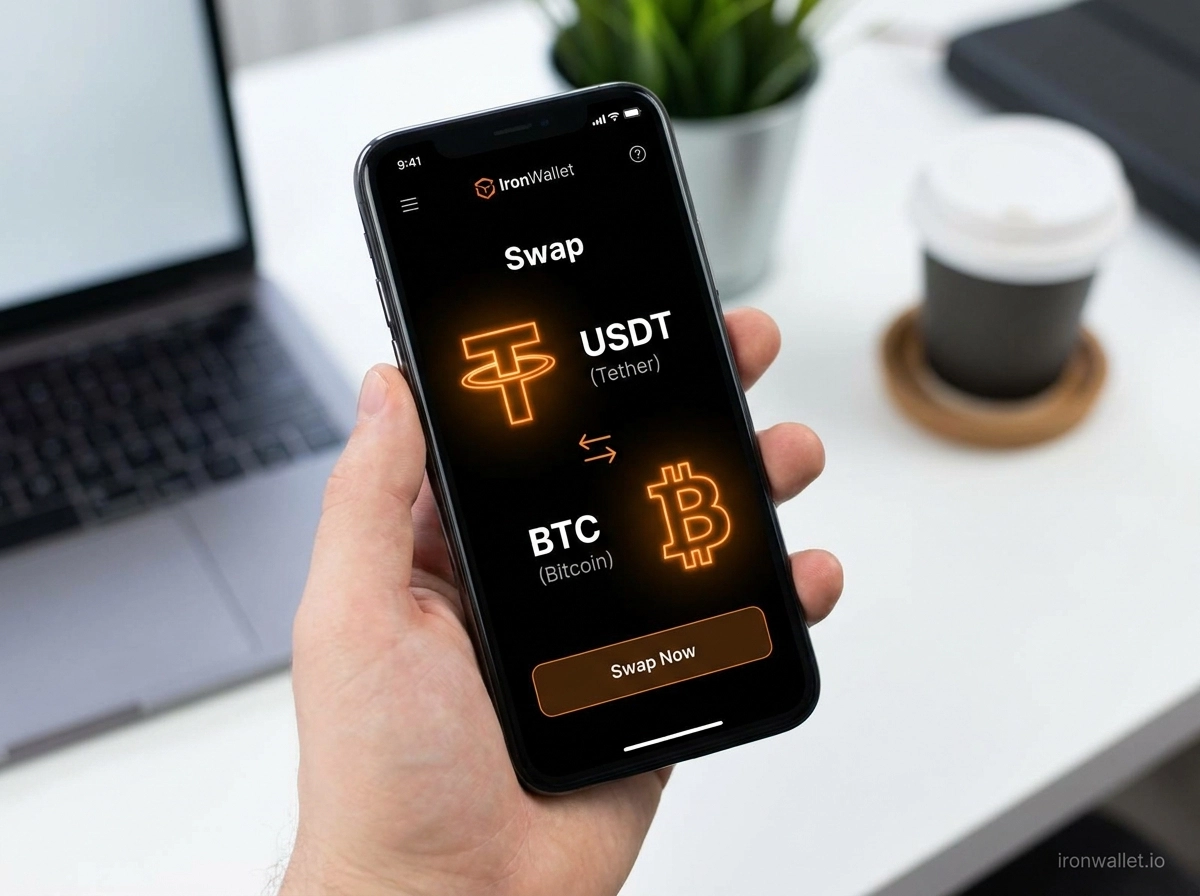
What to do: use a non-custodial hot wallet like IronWallet for day-to-day amounts, purchases, and active positions. Move anything you consider "savings" into cold storage. This mirrors how most people already handle traditional finance: cash in your pocket, savings in the bank.
Scenario 4: You're new to crypto and just getting started
If you're still learning how wallets, transactions, and networks work, jumping straight to cold storage can actually work against you. Losing access to a hardware wallet or mishandling a seed phrase backup before you fully understand the process is a common way beginner lock themselves out of their own funds.
What to do: start with a hot wallet you fully understand, get comfortable sending, receiving, and verifying transactions, and back up your seed phrase properly from day one. Move to cold storage once your holdings grow and you're confident in your process.
Scenario 5: You travel frequently or live somewhere with higher physical or political risk
Cold storage isn't only about hackers. A hardware wallet or paper backup can be lost, seized, or stolen just like any physical item, and unlike a bank, there's no customer service line to call if it disappears. If you cross borders often or are concerned about physical security, a hot wallet with strong device-level protection (PIN, biometrics, non-custodial architecture) can actually be the lower-risk option for the funds you carry with you.
What to do: keep travel funds in a well-secured hot wallet, and if you do use cold storage, don't keep your only backup in the same place as the device itself.
The real risk isn't the wallet type, it's mismatched usage
Nearly every significant loss story tends to follow a similar pattern: someone stored substantial amounts in a hot wallet that they used regularly, or someone placed their spending money into cold storage and then became anxious when trying to access it during market fluctuations. The type of wallet isn’t typically the problem; rather, it’s using the wrong one for the amount and intended purpose that leads to issues.
A simple rule that works for most people: if losing it would change your life, it belongs in cold storage. If losing it would just be annoying, a well-secured hot wallet is fine.
One principle that applies either way: non-custodial only
Whether you choose hot, cold, or a mix of both, the deciding factor that matters most is who controls the private keys. A custodial hot wallet on an exchange and a custodial "cold storage" service run by a third party carry the same underlying risk: you're trusting someone else not to lose, freeze, or misuse your funds. Non-custodial storage, hot or cold, keeps that decision in your hands alone.
Keep your everyday funds secure with IronWallet
IronWallet is a fantastic non-custodial wallet designed for active, everyday use! It keeps your private keys secure on your device, giving you complete control over every transaction. Plus, you can dive right in without any KYC requirements. It's the perfect hot wallet to complement your smart storage strategy, always ready when you need it, while your long-term assets remain securely offline in cold storage.
Download IronWallet on the App Store or Google Play and take control of the crypto you use every day.
Ermo Eero, Schaan, Liechtenstein